
Garage Door Won't Close All the Way? 7 Causes to Check
The door starts down, stops, and goes back up. Or it closes most of the way and leaves a gap at the floor. A door that won't close is one of the most common garage door problems in San Antonio, TX, and the cause is often simple. This guide covers seven causes to check, the safe checks a homeowner can make, and when it's time for a technician.
San Antonio Garage Door Experts is a free quote service, not a garage door company. It doesn't repair doors or set prices. Independent local garage door companies reply to requests and quote their own prices, and some of them may pay to receive requests.
Quick checks first
- Is the power on? If the power is out, the opener won't run. During long outages, like February 2021, an opener without battery backup won't lift or lower the door. CPS Energy customers can check the CPS Energy outage map.
- Does the wall button work but not the remote? Try new remote batteries. Many wall controls also have a lock or vacation feature that blocks remotes.
- Are any lights blinking? The blinking light guide covers what those often mean.
7 causes to check
1. Something is blocking the sensors
Openers made since January 1, 1993 must reverse within 2 seconds of contact with an obstruction and have secondary entrapment protection such as photo eyes (16 CFR 1211). The two small photo eyes sit low on each side of the opening. A trash bin, a bike tire, leaves, a cobweb or a spider on the lens can break the beam. Clear the path and wipe both lenses with a soft, dry cloth.
2. The sensors are out of line
Cars, bikes and trash cans bump sensors out of line. Most photo eyes have a small indicator light; on many openers, a blinking or dark light on one unit means it can't see the other. Gently turn the unit by hand until its light goes steady. If a bracket is bent or a wire is loose, leave it for a technician.
3. Low sun is shining into a sensor
Low afternoon sun can shine into a photo eye and keep the door from closing. West-facing garages can see this on many evenings. If the problem only happens at certain times of day, try again after the sun moves, and mention the pattern when you ask for quotes. A technician may suggest a sun shield or swapping which side the sending and receiving units sit on.
4. Something on the floor, or a worn bottom seal
A rake handle, a stone or a lump of debris under the door can make the opener reverse at the floor. So can a warped or torn bottom seal. Long stretches of 100-degree days can dry out bottom seals, and water or mud at the threshold after heavy rain can soak them. A seal replacement is usually a modest job.
5. The close-limit or force setting is off
Openers have a setting for how far the door travels down and how much resistance the motor accepts before it reverses. If the door touches the floor and pops back up, or stops a few inches short, one of these settings may be off. Some openers let a homeowner adjust them following the owner's manual. If you're unsure, or the setting keeps drifting, have it checked. After any change, the door must still reverse when it meets an obstruction.
6. The door is binding in its track
A bent track, a worn roller, a roller out of the track or a dented section can make the door drag. The opener reads that drag as an obstruction and reverses. If the door looks crooked or you hear scraping, stop using the opener. The off-track and cable repair page covers this.
7. A broken spring or cable
If a spring or cable has broken, the door may slam down, hang crooked or refuse to move evenly. Stop using the opener. The spring repair page covers what a technician typically does.
Safety first: Torsion springs store enough energy to cause serious injury. Leave spring and cable work to a trained technician. If a spring has broken, stop using the opener and don't try to lift the door by hand. If the door is closed, leave it closed. If it is stuck open or partway, keep people, pets and cars out of the opening. Pull the emergency release only with the door fully closed.
Symptom, likely cause, who handles it
| What the door does | Often points to | Who handles it |
|---|---|---|
| Reverses right away; sensor light blinking | Blocked, dirty or misaligned photo eye | Homeowner check first |
| Won't close only in late afternoon | Sun shining into a sensor | Homeowner check, then technician |
| Touches the floor and goes back up | Close-limit or force setting, debris, worn seal | Homeowner check, then technician |
| Stops partway with scraping | Track, roller or bent section | Technician |
| Crooked, slack cable, loud bang earlier | Broken spring or cable | Technician only |
| Nothing happens at all | Power, remote batteries, wall-control lock, opener | Homeowner check, then technician |
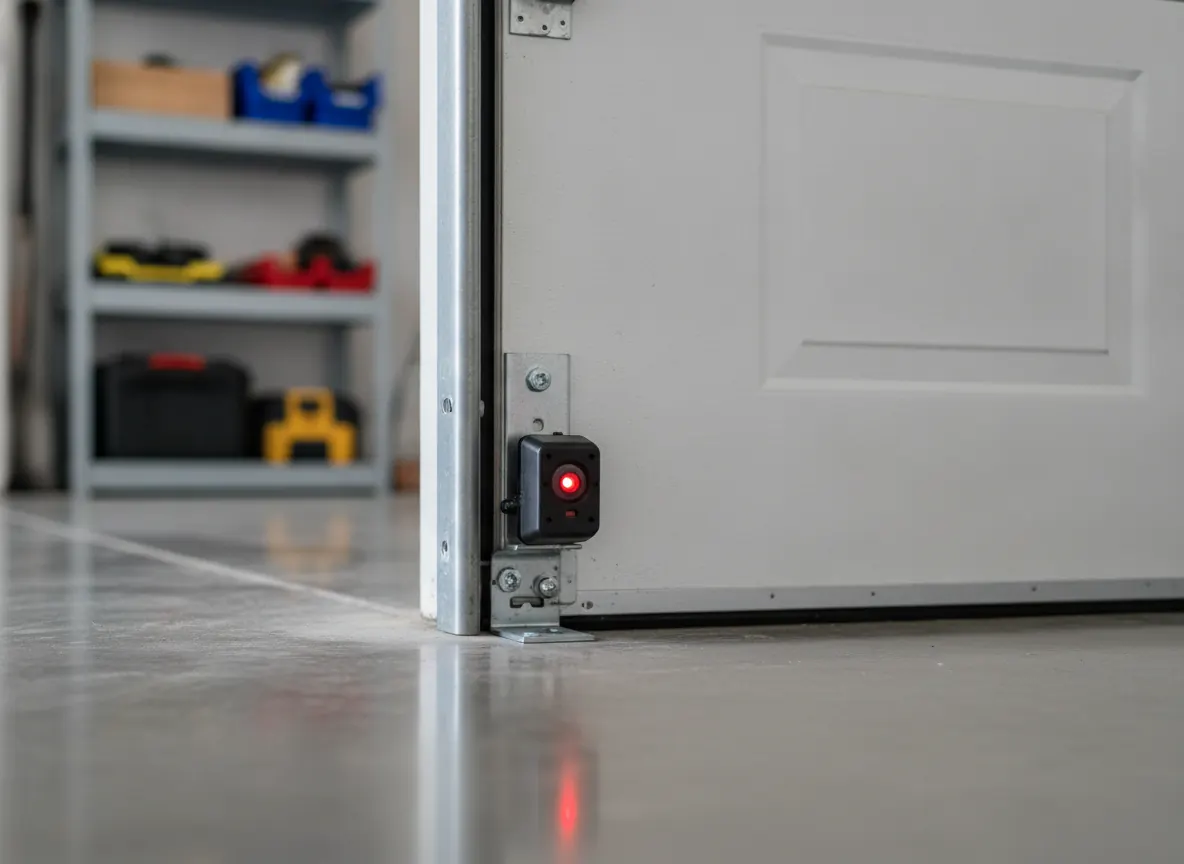
What not to do: Don't tape over, remove or bypass the sensors to make the door close. They keep the door from closing on a person, pet or car. Don't force a door that is binding. Pull the emergency release only with the door fully closed; on a door stuck open, releasing it can let it fall if a spring is broken.
When it's urgent
A door stuck open overnight, a car stuck inside, or a door damaged in a storm can't always wait. The emergency garage door repair page covers safe next steps. Fixr puts after-hours or emergency surcharges at $100–$300, so if the door is closed and secure, a weekday visit may cost less.
What the fix might cost
Many "won't close" problems end up as a sensor adjustment, a seal or an opener setting. Others turn out to be a track, cable or spring repair.
| Item | Typical range | Source |
|---|---|---|
| Opener repair | $100–$300 | Fixr, Jan 2025 |
| Off-track repair | $100–$300 | Fixr, Jan 2025 |
| Cable repair | $100–$200 · $170–$320 | Fixr, Jan 2025 · This Old House, Mar 2026 |
| Service call / trip fee | $50–$75 | Fixr, Jan 2025 |
| After-hours or emergency surcharge | +$100–$300 | Fixr, Jan 2025 |
The cost guide has the full table and a planning calculator. Ask for a written, itemized estimate, and ask the technician to test the auto-reverse and photo eyes before leaving. Test the reversing feature yourself once a month.
To get quotes from independent local companies, describe what the door is doing through the free quote form or call (726) 600-2478.
Frequently asked questions
Why won't my garage door close all the way?
The most common causes are blocked, dirty or misaligned safety sensors, low sun shining into a sensor, something on the floor, an opener close-limit or force setting that's off, a door binding in its track, or a broken spring or cable. Start with the sensors and the floor.
Why does my garage door go down and then back up?
Usually the opener thinks something is in the way. That can be a broken sensor beam, an object on the floor, a door binding in the track, or a close-limit or force setting that's off. Check the sensors first, then have a technician look if it continues.
Can sunlight stop a garage door from closing?
Yes. Low afternoon sun can shine into a photo eye and keep the door from closing. If the door only acts up at certain times of day, try again after the sun moves and mention the pattern when you ask for quotes.
Is it safe to hold the wall button to close the door?
On many openers, holding the wall button closes the door even when the sensors are out of line. Only do that while you watch the whole opening and nobody is near it, and treat it as a stopgap. Get the sensors checked so the door can reverse normally.