
Garage Door Opener Stopped Working? What to Check First
You press the button and nothing happens. Or the motor hums and the door sits still. Or the door starts down, then backs up. A dead opener is one of the most common garage door calls in San Antonio, TX, and the cause is often simpler than a new motor.
This guide walks through the checks a homeowner can do safely, in the order that usually finds the problem fastest. It also covers the signs that point to a spring or cable, which are jobs for a trained technician, and what opener repair or replacement tends to cost in published guides.
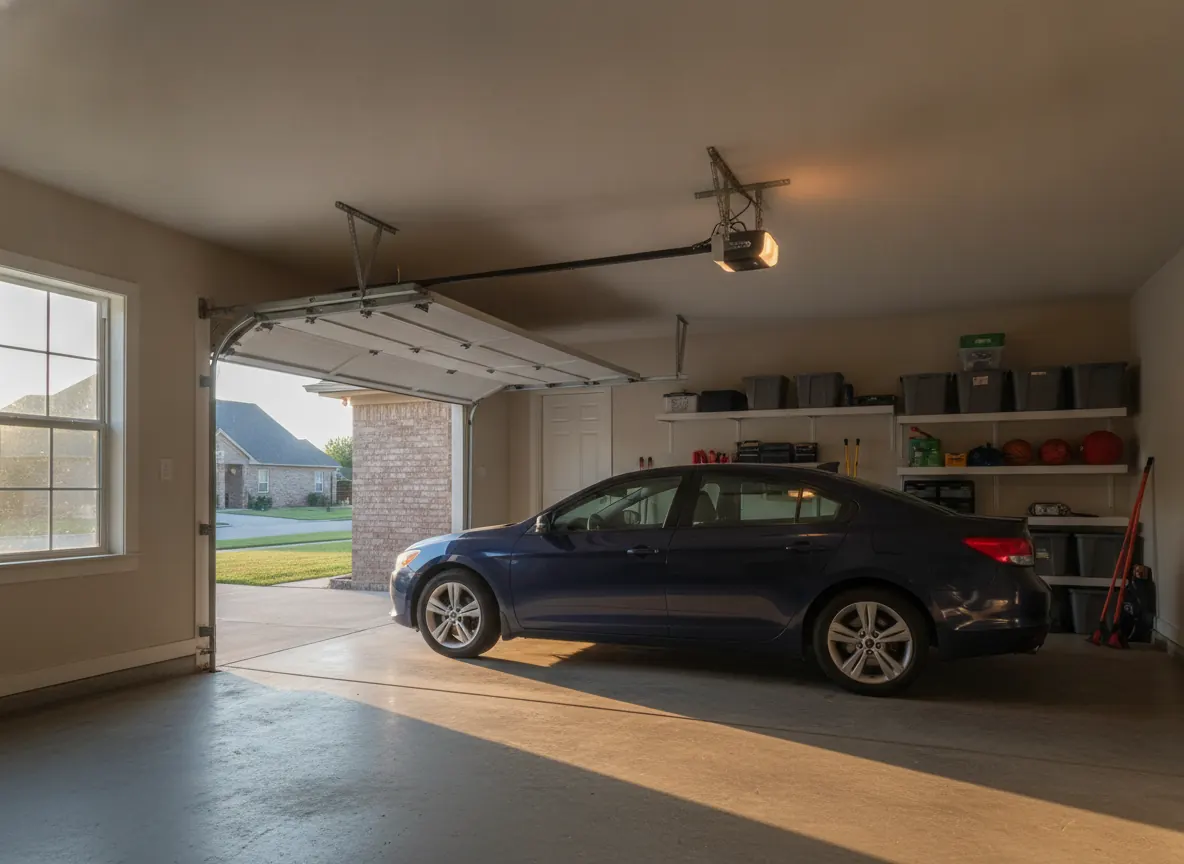
First, is the problem the opener or the door?
An opener only pulls and pushes the door. The springs do the heavy lifting. If a spring has broken, even a healthy opener may strain, hum or quit after a few inches. So before you blame the motor, look at the door itself:
- Look up at the torsion spring on the bar above the door. A gap of a few inches in the coil means it has broken.
- Look along both sides for a loose or dangling cable, or a roller that has come out of the track.
- Think back: a loud bang from the garage, even days ago, often means a spring let go.
If you see any of these, stop pressing the button. Running the opener against a broken spring or a door off its track can bend parts and turn a single repair into several. Our guides to garage door spring repair and off-track and cable repair explain what happens next.
Safe checks, in order
1. Power
Check whether the opener's light comes on. If it doesn't, try a lamp in the same ceiling outlet, look for a tripped breaker, and check for a reset button on a nearby outlet. If the whole street is dark, check the CPS Energy outage map (or your own electric provider's map if you are outside CPS territory). If the outlet itself is dead and needs new wiring, that is work for a licensed electrician, not a garage door company.
2. The remote and the wall button
If the wall button works but the remote doesn't, replace the remote battery first. If neither works, look at the wall control: many units have a lock or "vacation" setting that blocks remotes, and it is easy to switch on by accident. Your opener's manual will show where it is.
3. The safety sensors
If the door opens fine but reverses or refuses to close, the photo eyes near the floor are the usual suspect. Check that both small lights are steady, wipe the lenses, and make sure nothing is in the beam. Low afternoon sun can shine into a photo eye and keep the door from closing, which is common on west-facing garages. Our page on garage door sensor repair goes deeper, and if the opener's light is flashing, see why the opener light blinks.
4. The emergency release
If the motor runs and the chain or belt moves but the door doesn't, the trolley may be disconnected. That happens after someone pulls the red emergency cord. Your manual explains how to reconnect it, usually by running the opener with the door closed until the trolley clicks back in.
5. Heat
San Antonio averages about 122 days a year at 90°F or hotter and about 18 at 100°F (NOAA 1991–2020 normals), and 2023 set a record with 75 days at 100°F or more (National Weather Service). A closed garage on a summer afternoon can run hotter than that. Many openers have a thermal overload that can stop the motor when it overheats, especially after several cycles in a row. If the opener quits on a hot afternoon and works again after it cools down, mention that pattern to whoever looks at it.
| What you notice | Common cause | Who handles it |
|---|---|---|
| No light, no sound | Power, breaker, outlet or outage | You; an electrician for wiring |
| Wall button works, remote doesn't | Remote battery, lock setting, reprogramming | You, using the manual |
| Door reverses or won't close | Photo eyes blocked, dirty, misaligned or sun glare | You first; a technician if wiring is damaged |
| Motor hums, door doesn't move | Broken spring, worn gear or failed capacitor | A trained technician |
| Motor runs, door doesn't move | Trolley disconnected, stripped gear | You to reconnect; a technician for gears |
| Quits on hot afternoons | Possible thermal overload | A technician to check load and balance |
Need the door open during an outage?
Manufacturer guidance is consistent: pull the emergency release only with the door closed, check first that the springs are intact, and unplug the opener so it can't start if the power comes back. Then lift the door by hand. If it feels too heavy to lift, don't force it; that usually means a spring problem. During long outages, like February 2021, an opener without battery backup won't lift the door, so know where your manual release is. Battery backup is optional in Texas (California requires it; Texas does not).
Repair or replace the opener?
Many opener problems are fixable: a remote, a sensor, a gear kit or a circuit board. Replacement makes more sense when the unit is old, parts are hard to find, or it lacks modern safety features. Openers made since January 1, 1993 must reverse within 2 seconds of hitting an obstruction and have secondary entrapment protection such as photo eyes (16 CFR 1211). If yours is older than that, ask about replacing it rather than repairing it. Whatever you have, test the auto-reverse and photo eyes monthly.
Published national estimates (Fixr, Jan 2025) put opener repair at about $100–$300 and a new opener, installed, at about $300–$600 (average about $480). A service call or trip fee often runs $50–$75, and an after-hours visit can add $100–$300. San Antonio-area quotes vary. See the full table on our garage door repair cost page, and the opener repair page for belt, chain and wall-mount options.
When it's urgent
A stuck opener becomes urgent when a car you need is trapped inside, the door won't close at night, or the door is hanging crooked. In those cases, leave the door where it is, keep people and pets clear, and call for help. Our emergency garage door repair page explains what to expect, including after-hours charges.
Questions to ask before you approve work
- What exactly failed, and can you show me?
- Is there a trip fee, and is it credited if I approve the repair?
- Can I have a written estimate with parts itemized?
- What are the warranty terms on parts and labor, in writing?
- If a new outlet or circuit is needed, who is the licensed electrician?
San Antonio Garage Door Experts is a free quote-matching service, not a garage door company. Describe the problem once on the free quote form and independent local companies can reply. Companies may pay to receive requests. You can also call (726) 600-2478 to be connected with a local garage door company.
Frequently asked questions
Why did my garage door opener suddenly stop working?
The most common causes are a power problem, a dead remote battery, a lock setting on the wall control, blocked or misaligned safety sensors, or a disconnected trolley after someone pulled the emergency release. A broken spring can also make a working opener stall or hum.
Why does my opener hum but the door won't open?
A humming motor with a door that won't move often points to a broken spring, a worn gear or a failed capacitor. Stop pressing the button and look at the spring above the door. Spring work should be left to a trained technician.
Can heat make a garage door opener stop working?
Possibly. Many openers have a thermal overload that can stop the motor when it overheats, and San Antonio averages about 122 days a year at 90 degrees or hotter. If the opener quits on hot afternoons and recovers after it cools, tell the technician about that pattern.
How do I open my garage door when the power is out?
With the door closed, check that the springs look intact, unplug the opener, then pull the red emergency release cord and lift the door by hand. If the door is too heavy to lift, don't force it. Check the CPS Energy outage map or your provider's map for restoration updates.