
Why Is My Garage Door So Loud? Rollers, Springs and Openers
A garage door that squeals, grinds or rattles is annoying, and in a house with a bedroom over the garage it can wake everyone up. Most noise comes from a short list of parts: rollers, hinges, springs, the opener and loose hardware. Some of it is a simple maintenance fix. Some of it is a warning. This guide helps you tell the two apart in a San Antonio, TX garage.
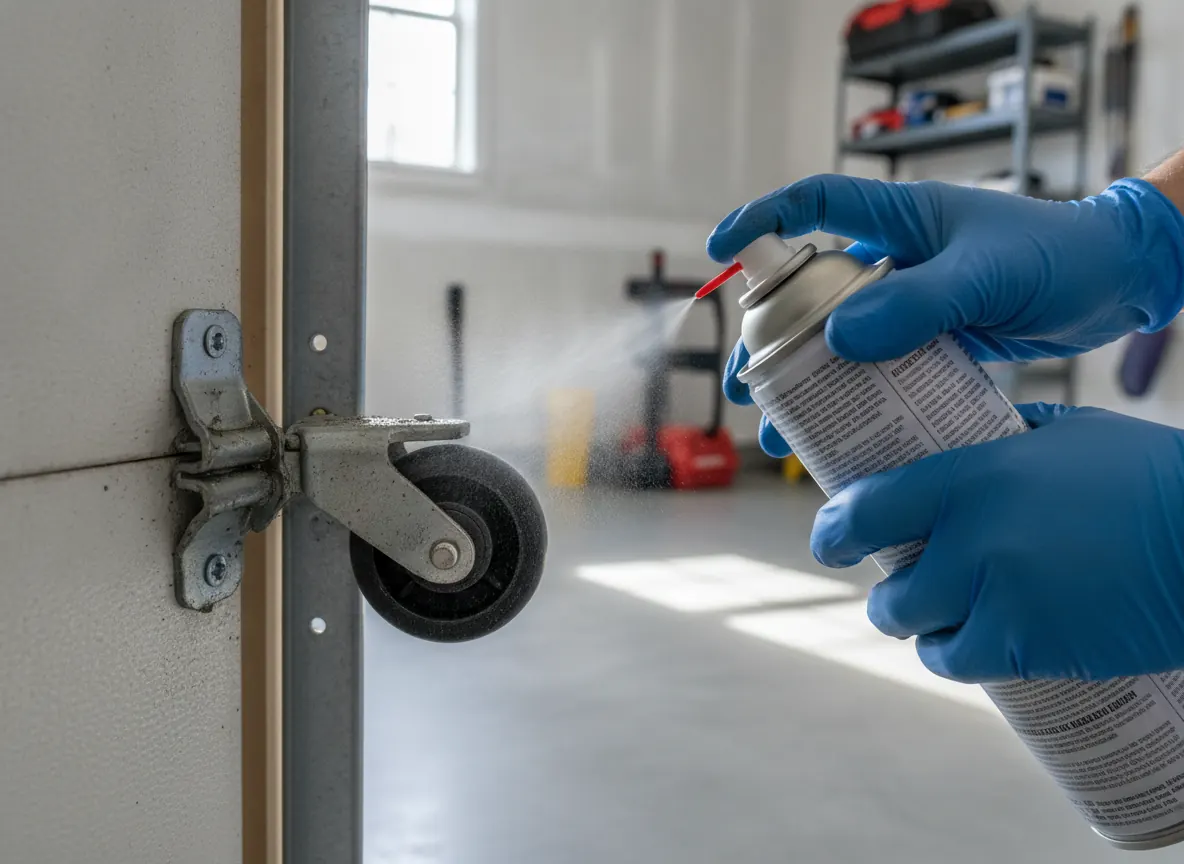
Match the noise to the part
| Noise | Likely source | What to do |
|---|---|---|
| Squeaking or squealing | Dry hinges, roller bearings or springs | Lubricate hinges and roller bearings; have springs looked at during a tune-up |
| Grinding or scraping | Worn rollers, bent track, rubbing hardware | Have a technician inspect rollers and track |
| Rattling or clanking | Loose hinge or track bolts, a chain slapping | Check visible bolts on hinges; leave bottom brackets alone |
| Popping or creaking as it moves | Springs, hinges or panels flexing | Ask for a balance check |
| One loud bang, then the door is heavy | A broken spring | Stop using the door; call for repair |
| Opener straining or humming loudly | Door out of balance, worn gear, overheating | Stop and have the door and opener checked |
Squeaks: usually rollers and hinges
A high squeal as the door moves is often metal rubbing on metal at the hinges or in the roller bearings. Steel rollers tend to be louder than nylon ones, and worn bearings get louder over time. A light coat of a lubricant made for garage doors on the hinges and roller bearings often quiets them. Follow the product label and your door maker's guidance, wipe off excess, and keep lubricant off the photo eyes.
Heat plays a part. San Antonio averages about 122 days a year at 90°F or hotter and about 18 at 100°F (NOAA 1991–2020 normals), and 2023 set a record with 75 days at 100°F or more (National Weather Service). Long stretches of 100-degree days can dry out bottom seals and thin lubrication, so a door that was quiet in spring may be squeaking by August.
Grinding: rollers wearing out or track problems
A grinding or scraping sound usually means a roller has worn down, lost its bearing, or is riding badly in a bent or misaligned track. If you see a roller wobbling, a dent in the track, or a gap between the door and the track on one side, stop and have it looked at. A door that jumps the track can hang crooked and fall. See our page on off-track and cable repair.
Rattles: loose hardware and the opener
Every open and close vibrates the door, and over time the bolts on hinges and track brackets can work loose. You can check the hinge bolts you can reach with the door closed. Do not loosen or tighten anything on the bottom brackets, the cable drums or the spring assembly; those parts are under spring tension.
The opener can be a big part of the racket. Chain-drive openers are usually louder than belt-drive models, and a slack chain can slap against its rail. Wall-mount openers move the motor off the ceiling. If you're replacing an old opener anyway, a quieter drive may be worth asking about. Our opener repair page compares the types.
Bangs and pops: listen to the springs
Torsion springs sometimes creak or ping as they wind and unwind, and a tune-up can help. A single loud bang from the garage is different. It often means a spring has broken. The door will feel very heavy, may only rise a few inches, and the opener may strain or hum. Stop using the door. Read more on our garage door spring repair page.
Safety first
Torsion springs store enough energy to cause serious injury. Leave spring and cable work to a trained technician. Lubricating hinges and roller bearings is routine maintenance; adjusting springs, cables or bottom brackets is not a DIY job. Pull the emergency release only with the door closed.
A quick monthly check
- Watch the door open and close. It should move smoothly, without jerking or leaning to one side.
- Listen for new noises and note when they happen: opening, closing or at one point in the travel.
- Look at the springs and cables for gaps, fraying or rust.
- Test the auto-reverse: openers made since January 1, 1993 must reverse within 2 seconds of hitting an obstruction and have secondary entrapment protection such as photo eyes (16 CFR 1211). Lay a board flat under the door and close it; it should reverse.
- Wave something through the photo-eye beam as the door closes; it should reverse.
What a tune-up costs
This Old House (March 2026) puts a garage door tune-up at about $120–$240, a published national estimate rather than a quote. A tune-up usually covers lubrication, tightening hardware, checking balance and testing the safety features. If rollers or springs need replacing, that is quoted separately. A service call or trip fee often runs $50–$75 (Fixr, Jan 2025). San Antonio-area quotes vary; see the full table on the garage door repair cost page.
Questions to ask
- What is making the noise, and can you show me?
- Is the door balanced? What did the balance test show?
- Is roller replacement included in the tune-up, or extra?
- Is there a trip fee, and is it credited if I approve the work?
- Can I get a written estimate and an itemized invoice?
San Antonio Garage Door Experts is a free quote-matching service, not a garage door company. Describe the noise on the free quote form, and independent local companies can reply with quotes. Companies may pay to receive requests. You can also call (726) 600-2478.
Frequently asked questions
Why is my garage door so loud when opening?
The most common causes are dry hinges and roller bearings, worn rollers, loose hardware and a noisy chain-drive opener. A loud bang followed by a heavy door usually means a broken spring, which needs a trained technician.
What can I spray on a noisy garage door?
Use a lubricant made for garage doors on the hinges and roller bearings, following the product label and your door maker's guidance. Wipe off excess and keep it off the safety sensors. Leave springs, cables and bottom brackets to a technician.
Does heat make garage doors noisier?
It can. Long stretches of 100-degree days in San Antonio can dry out bottom seals and thin lubrication, so hinges and rollers may start squeaking in late summer. Regular lubrication and a tune-up usually help.
How much is a garage door tune-up?
This Old House (March 2026) puts a tune-up at about $120 to $240. Replacement rollers or springs are usually quoted separately, and a trip fee may apply. San Antonio-area quotes vary.