
How Long Do Garage Door Springs Last in South Texas Heat?
Garage door springs don't wear out on a calendar. They wear out by use. A spring on a door that opens twice a day can last many years longer than the same spring on a door that a busy household runs ten times a day. This guide covers published spring lifespans, how to estimate your own, what South Texas heat does and doesn't do, and what to expect when a spring finally goes in San Antonio, TX.
San Antonio Garage Door Experts is a free quote service, not a garage door company. It doesn't repair doors or set prices. Independent local garage door companies reply to requests and quote their own prices, and some of them may pay to receive requests.
How long do garage door springs last?
National cost guides measure spring life in cycles. One cycle is one open and one close.
| Spring type | Typical life | Rated cycles |
|---|---|---|
| Extension | About 7–12 years | About 10,000 |
| Torsion | About 8–15 years | Up to about 20,000 |
Fixr says springs should last at least 10,000 cycles. Those figures assume a standard spring sized to the door. Higher-cycle springs are sold too, and the rating should be on the quote if you ask.
Estimate your own spring life
The math depends on how you use the garage. Here is what 10,000 cycles works out to at different daily counts, based on Fixr's figures.
| Cycles per day | Roughly how long 10,000 cycles lasts |
|---|---|
| 2 | About 13–14 years |
| 3 | About 9–10 years |
| 5 | About 5–6 years |
Count the trips for a normal day. If the garage is the main way in and out of the house, include every drop-off, errand and grab-from-the-fridge trip. Teen drivers, two commuters and a garage gym can push a door well past five cycles a day.
Does South Texas heat wear springs out faster?
Here is the honest answer: no source found ties San Antonio heat to a specific spring failure rate. Springs are steel, and the main thing that wears them out is repeated twisting or stretching.
Heat still matters around the edges. San Antonio averages about 122 days a year at 90°F or hotter and about 18 at 100°F (NOAA 1991–2020 normals), and 2023 set a record with 75 days at 100°F or more (National Weather Service). Long stretches of 100-degree days can dry out bottom seals and thin lubrication. A door industry technical sheet (DASMA TDS-190) says rust "reduces the effective area of spring wire" and that lubrication "will help to maximize spring cycle life." So the heat itself may not break a spring, but a dry, rusty, poorly balanced door can work its springs harder.
Water matters too. After a flood or heavy rain that reaches the garage floor, bottom brackets and track bases can rust. If a flood reached your opener, have it checked before it's powered.
Signs your springs are near the end
- Visible gaps or stretched-out coils.
- Rust on the spring wire.
- The door feels heavier than it used to, or the opener strains and slows.
- The door rises unevenly or one side lags.
- A squeak or grinding from the spring area that lubrication doesn't fix.
- The door won't stay put when partly open, which can point to a balance problem.
A technician can check the door's balance and spring condition during a tune-up. This Old House puts a tune-up at $120–$240 nationally.
Safety first: Torsion springs store enough energy to cause serious injury. Leave spring and cable work to a trained technician. If a spring has broken, stop using the opener and don't try to lift the door by hand. If the door is closed, leave it closed. If it is stuck open or partway, keep people, pets and cars out of the opening. Pull the emergency release only with the door fully closed.
Can you make springs last longer?
A few habits help, and none of them involve touching the springs.
- Ask about a yearly tune-up. A technician can lubricate moving parts, check balance and spot wear early.
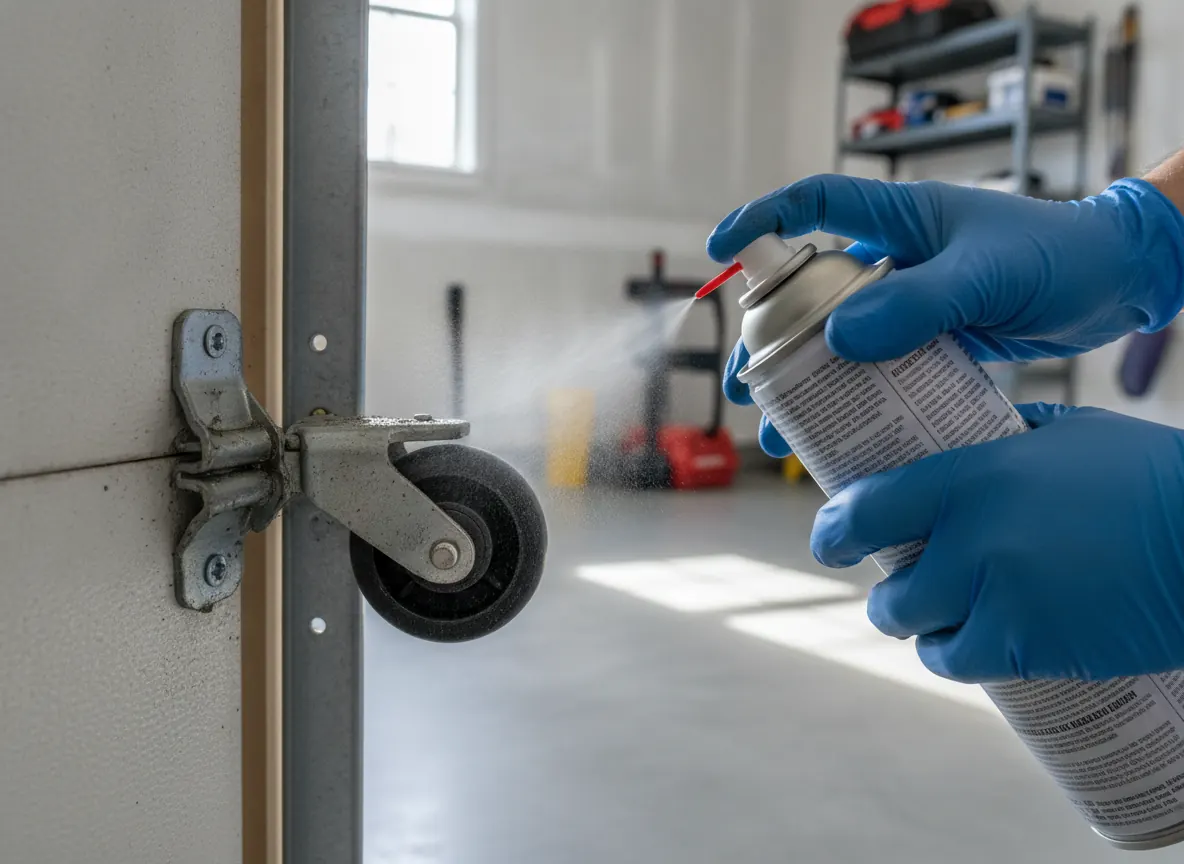
- Replace worn rollers. Rollers that bind make the whole system work harder.
- Ask about higher-cycle springs when the time comes, if your door runs often.
- Cut extra cycles where it's easy, such as using another door for quick trips.
- Don't adjust springs yourself. Spring tension is technician work.
San Antonio homes and spring age
The median San Antonio home was built in 1985 (Census ACS 2020–2024). At typical usage, a door from that era has likely had its springs replaced at least once, and the original opener may be long gone too. Newer homes on the north and far-west sides more often have two- and three-car doors, which are heavier and use larger springs. If you bought a home recently, you may not know when the springs were last replaced; a tune-up visit is a reasonable way to find out.
When a spring breaks
Most spring breaks are noticed when the door won't open. If the door is closed and no car is trapped, you usually have time to compare quotes. If a car is stuck inside or the door is stuck open, see the emergency repair page. The spring repair page covers the job itself, and the spring cost guide and the repair cost guide cover published price ranges.
To get quotes from independent local companies, use the free quote form or call (726) 600-2478.
Frequently asked questions
How long do garage door springs last?
National guides tie spring life to cycles, not years. Fixr says springs should last at least 10,000 cycles. This Old House puts extension springs at about 7–12 years and torsion springs at about 8–15 years. How often you use the door matters more than the calendar.
Does Texas heat make garage door springs break faster?
No source found ties San Antonio heat to a specific spring failure rate. Heat can thin lubrication, and a door industry technical sheet says lubrication helps maximize spring cycle life, so a yearly tune-up is reasonable. Usage is the bigger factor.
What is a garage door spring cycle?
One cycle is one full open and one full close. A household that opens and closes the door twice a day runs about 730 cycles a year. Families that use the garage as the main entry can run several times that.
Are high-cycle springs worth it?
They can be if you use the garage door many times a day or plan to stay in the home for years. They cost more up front. Ask for the cycle rating and price of both options in writing, and compare them against how often your door runs.